
The Municipality of Paphos is embracing a new era of smart water management through a large-scale digital transformation project executed by Olympios Group. At its core lies IANIC’s IoT Platform, SmartVille, acting as the digital brain of the water management system.
This pioneering project focuses on the implementation of an integrated water resource management and smart metering system, designed to ensure efficient water use, operational excellence, and long-term sustainability.
Project drivers
The initiative was driven by the need to address critical challenges in modern water utility management, including:
- Continuous, non-intermittent water supply.
- Leakage detection and Non-Revenue Water (NRW) reduction.
- Remote monitoring and operation of infrastructure.
- Energy efficiency optimization.
- Water balance assessment.
- Water quality monitoring.
- Cost reduction and efficient resource management.
The solution
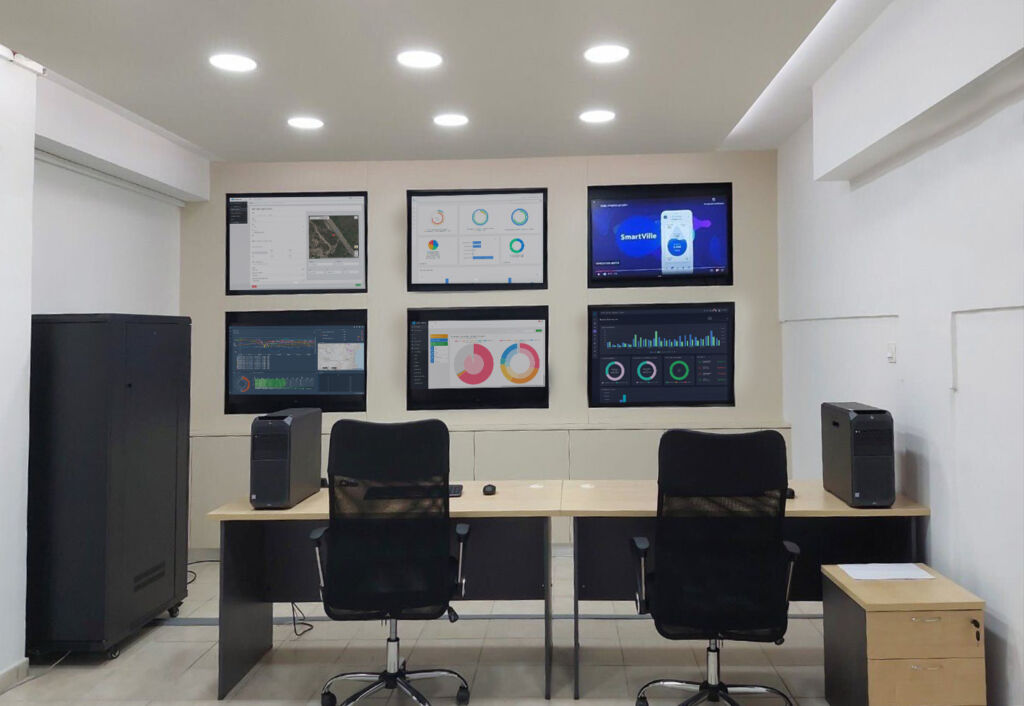
A comprehensive digital ecosystem was implemented, centered around a Central Control Station powered by SmartVille IoT platform and SCADA system, installed in an on-premises environment.
Key elements include:
- Replacement of 27,000 conventional meters with smart water meters.
- Deployment of a LoRaWAN network for reliable, high-frequency data transmission.
- Installation of telemetry systems at 16 critical external network points (tanks, pumping stations, boreholes).
- Network segmentation into District Metered Areas (DMAs) for accurate monitoring and control.
- Remote metering at DMA entry points.
- Pressure and water quality monitoring stations across the network.
- Automatic chlorination systems ensuring high water quality.
- Full GIS mapping and digitization of the water supply network.
SmartVille IoT Platform – The digital experience
At the heart of the project lies IANIC’ SmartVille IoT platform, which acts as the central intelligence layer of the entire water management system.
The platform enables the continuous and automated collection of data from all installed smart water meters and devices, with readings captured up to six times per day. This high-frequency data acquisition provides a detailed and dynamic view of water consumption across the municipality.
All incoming data is:
- Securely transmitted through the LoRaWAN network.
- Processed and validated in real time.
- Stored within a scalable big data infrastructure.
- Analyzed using advanced algorithms to detect patterns, anomalies and inefficiencies.
Through SmartVille’s intuitive dashboards, operators gain:
- Real-time visibility of the entire water network.
- Detailed consumption analytics at both macro and micro levels.
- Immediate detection of irregular consumption, leaks or system faults.
- Historical data insights for long-term planning and optimization.
The platform transforms raw data into actionable intelligence, enabling faster decision-making, improved operational control and more efficient allocation of resources.
SmartVille app – Empowering citizens
Complementing the central platform, SmartVille web and mobile application delivers a fully digital, user-centric experience for water consumers in the Municipality of Paphos.
The application provides:
- Real-time access to individual water consumption data.
- Daily usage insights and trends, promoting awareness and responsible consumption.
- Instant notifications and alerts in case of leaks, abnormal usage, or meter malfunctions.
- A transparent and accessible interface that strengthens trust between consumers and the utility.
By putting data directly into the hands of citizens, SmartVille app enhances engagement, encourages sustainable behavior, and significantly improves the overall customer experience.
Performance & KPIs
The project was designed around measurable performance indicators, including:
- Reduction of Non-Revenue Water (NRW) and real losses.
- Decrease in apparent losses and system input volume.
- Water savings (m³ over time).
- Reduction in energy consumption and pumping costs.
- Improved response times to network events.
- Increased accuracy of water metering.
- Decrease in system malfunctions and leak detection costs.
- Improved tracking of authorized consumption.
The impact
- From reactive to proactive operations: The system enables early detection of leaks and anomalies, transforming operations from reactive to proactive.
- Reduced water losses & improved efficiency: DMA segmentation and continuous monitoring significantly reduce NRW and optimize system performance.
- Enhanced energy efficiency: Demand-driven pump operation reduces energy consumption and operational costs.
- Improved water quality & reliability: Automated chlorination and real-time monitoring ensure safe and continuous water supply.
- Faster response & better service delivery: Real-time alerts and remote operation enable rapid intervention and improved customer service.
- Accurate billing & transparency: Smart metering enhances billing accuracy while empowering consumers with real-time insights.
A benchmark for smart water management
The Paphos project demonstrates how the integration of smart metering, telemetry and advanced analytics can redefine water utility operations.
By combining continuous monitoring, leak detection, NRW reduction and energy optimization, this initiative delivers a holistic approach to modern water management, enhancing service delivery while promoting environmental sustainability.
This transformation highlights the growing importance of digital infrastructure in water utilities and sets a strong benchmark for similar projects in Cyprus and beyond.

